What Equipment Does a Professional Shooting PD Use?
A Shooting PD has to be a one-person crew, so the kit has to cover everything: camera, sound, light and support, all of it portable enough to carry alone and good enough for broadcast. Here's exactly what I travel with, and why each part earns its place. You can also see the full equipment list on my site.
I'm a documentary director who's delivered to the BBC, Channel 5, RTÉ and TG4, and every item below has been used on those productions.
Camera and lenses
My main camera is the Sony A7S III: full-frame, 4K, 10-bit, with S-Log3 and exceptional low-light performance. That last point matters enormously in documentary, where you film in whatever light the real world gives you.
On the front I run a versatile set of lenses: a Sigma 16-24mm F2.8 and Sigma 24-70mm F2.8 for fast, sharp work, plus a Sony 28-135mm F4 and a Sony 24-240mm for reach and flexibility. Between them I can cover wide, intimate and distant without ever missing a moment to a lens change.
Movement and support
A static documentary feels lifeless, so movement matters. I carry a DJI Ronin RS-3 gimbal for smooth moving shots, a Manfrotto fluid-head tripod for locked-off stability, and a 5ft manual slider for subtle, controlled motion.
For aerials there's a DJI Mini 4 Pro drone, shooting 4K 60fps in 10-bit, which gives a film scale and a sense of place. A customisable shoulder rig, wireless follow focus and a 7-inch monitor round out the support, keeping me mobile and precise when I'm working solo.
Lighting
Light is what makes footage look professional, so I carry a compact but capable lighting kit: two Nanlite FS-300B key lights, a SmallRig RC60B, Aputure H528S and H528W panels, and a pair of Yongnuo YN360 RGB lights for colour and mood.
Just as important are the C-stands, light stands and 3ft x 5ft bounce, reflector and diffuser panels. Diffusion is what turns hard light soft and flattering, and it's the quiet difference between footage that looks lit and footage that looks cheap.
Sound
This is where a lot of people cut corners, and it's where I won't. Bad audio ruins a film faster than anything, so the sound kit is serious.
I run two Rode Wireless Go II dual lavalier kits for clean, reliable radio mics, a Rode NTG-2 shotgun on a shock-absorbing boom for atmosphere and interviews, and a Tascam DR-70D four-channel recorder to capture it all properly. As a Shooting PD I'm recording vision and sound at the same time, so this has to be foolproof.
Power, extras and the edit
The unglamorous gear keeps a shoot alive: a 20m extension reel and a set of four-gang extensions, so power is never the thing that stops the day.
I also carry a smoke machine and a teleprompter for when a project calls for them. And once filming wraps, the work moves to a mobile edit suite built around an M4 MacBook Pro, a 4K display and the full Adobe Creative Cloud, so I can cut the film as well as shoot it.
Why the kit matters
A Shooting PD's equipment has to do the work of an entire crew while staying light enough for one person to handle. That's the whole logic of the list above: broadcast-quality results, total self-sufficiency, and everything ready to travel.
When you hire me, the kit comes with me, set up and proven on national television. If a project needs more than I own, larger lighting or extra crew, I source and budget it through trusted Belfast rental houses as part of the production.
Frequently asked questions
What camera do professional Shooting PDs use? It varies, but a common choice is a full-frame mirrorless like the Sony A7S III for its low-light performance and broadcast-spec 10-bit 4K. I use one as my primary camera.
What equipment does a one-person film crew need? Camera and lenses, movement gear like a gimbal and tripod, a capable lighting kit with diffusion, a serious sound setup, reliable power, and an edit suite. The kit has to replace a full crew.
Why is sound equipment so important for a Shooting PD? Audiences forgive weak visuals far more than bad audio. A Shooting PD records picture and sound simultaneously, so dependable radio mics, a shotgun mic and a multi-channel recorder are essential.
Need a Shooting PD who arrives fully equipped for broadcast? Get in touch.
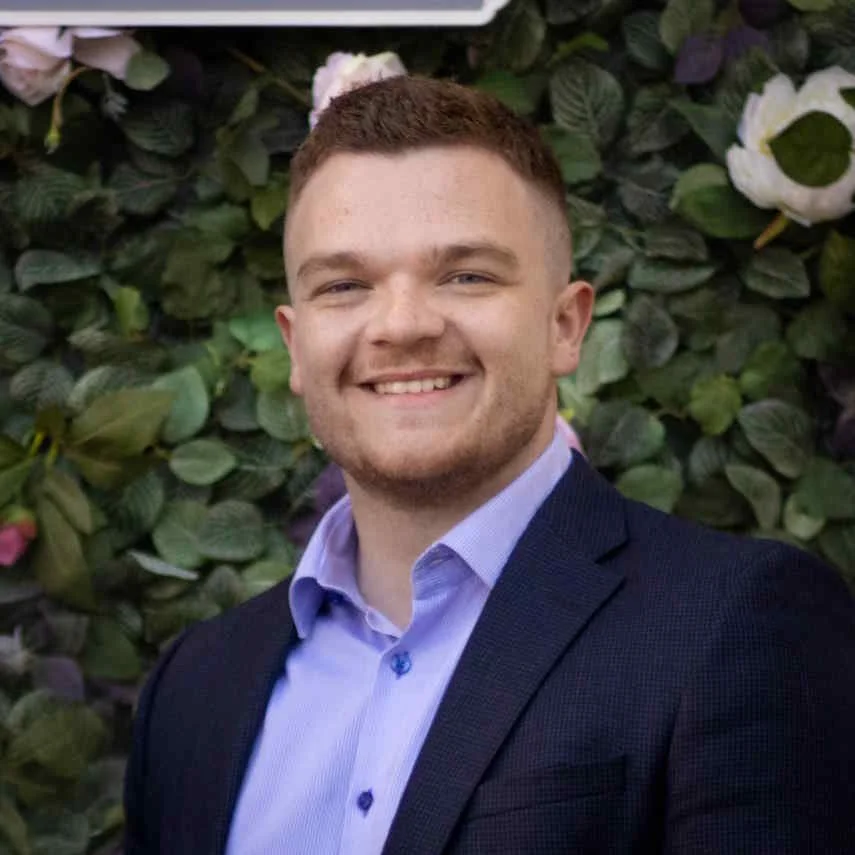
Work with Lloyd Edgar
Lloyd Edgar is a Northern Ireland-based documentary director, shooting producer/director and editor. He shot, directed and edited Rhys McClenaghan: Chasing Gold — a half-hour BBC documentary that began on the True North strand and was selected for national broadcast on BBC One as part of Our Lives, establishing him as one of the youngest directors ever featured in the strand. His follow-up film, Principal Ballerina, following Royal Ballet Principal Melissa Hamilton, was broadcast for the same strands, and he directed a ten-part conservation series for Channel 5.
Alongside his work as a director, Lloyd works as an editor, camera operator, drone pilot and motion graphics designer for both television and commercial productions, with credits for production companies including Ronin Films, Fine Point, CleanSlate and Triplevision. He is, in short, a multi-skilled, broadcast-proven documentary director — a safe pair of hands.
Production companies and executive producers looking for a documentary director or shooting PD in Belfast and across Northern Ireland can get in touch.