How to Hire a Shooting PD in Belfast: A Complete Guide for Executive Producers
If you are an executive producer at a production company and you need a documentary director or shooting producer/director (PD) based in Belfast or anywhere in Northern Ireland, this guide is written for you. It walks through exactly how to find the right person, how to vet them, what to look for, what should make you nervous, and how to get the best work out of them once they are on board.
I write this as a working Shooting PD based in Northern Ireland. I have made films for BBC Northern Ireland (broadcast nationally on BBC One via the Our Lives strand) and a nature series for Channel 5. I have also been on the other side of this exact search — hired by a production company to direct a film I had nothing to do with developing. So I know what an EP is actually worried about when they go looking, because I have had to put those worries to rest myself.
The short version
If you only take one thing from this guide, take this: an executive producer is not looking for the flashiest reel. They are looking for a safe pair of hands. You are busy. You do not need a director who becomes an ongoing source of stress. The best regional documentary director is someone who can build genuine trust with contributors, who is technically self-sufficient across the whole production, and who can prove they can tell this story — ideally with a proof-of-concept teaser before you commit a budget.
The rest of this guide explains how to find that person and how to be confident you have.
What an executive producer actually needs from a documentary director
Most hiring guides start with showreels and kit lists. That is the wrong place to start.
When you commission a film, you are already carrying the pressure of the budget, the broadcaster, the schedule and the deliverables. The single most valuable thing a director can give you is the confidence that you can hand them a project and stop worrying about it. A safe pair of hands. Someone who removes a problem from your plate rather than adding one.
In a smaller territory like Northern Ireland, that confidence comes from a specific combination of qualities: the people skills to earn a contributor's trust, the technical range to deliver a broadcast film without a large crew, and a demonstrable track record of getting difficult projects across the line. Those three things, in roughly that order of importance, are what you are really hiring.
The most important quality: building trust with contributors
In factual filmmaking, the relationship between the director and the contributor is the film. You cannot fake intimacy on camera, and a contributor who does not trust the person behind the camera will give you a guarded, surface-level performance. Everything else — the cinematography, the edit, the music — is built on top of that trust.
This is the quality I would weight most heavily, and it is the hardest to read from a CV.
A few examples from my own work of why it matters:
On Rhys McClenaghan: Chasing Gold, my first BBC documentary, I was telling the story of a childhood friend on the world stage. Knowing the shape of his life from primary school onward let me structure his story honestly and approach the most painful moment — his fall at the Tokyo Olympics — with real care.
On Principal Ballerina, my film about Royal Ballet Principal Melissa Hamilton, there were subjects that were completely off limits at the start of production. Over many months of filming, Melissa came to trust me enough to discuss the things she had refused to touch at the beginning — to the point of breaking down in tears on a topic she had previously closed off entirely. That access was not a lucky break. It was the result of patient, careful relationship-building, and it is the difference between a film that nods at a story and one that actually tells it.
On the Love Nature series for Channel 5, I researched, contacted and filmed ten different contributors across Northern Ireland, each with their own story and their own reasons to be wary of a camera. Every one of those relationships had to be earned quickly and from scratch.
When you are vetting a director, this is the thing to probe for. Ask them how they win a contributor over. Ask them about a time someone shut down on camera and what they did about it. The answers will tell you far more than the reel.
Why "multi-skilled" matters more in regional production
Outside the big production hubs, budgets are tighter and crews are smaller. This is where a director's technical range stops being a nice-to-have and becomes the thing that keeps your project on budget and on time.
I shoot, direct and edit my own material. On more demanding shoots I bring in a sound recordist, but for the most part I hold the entire film in my own hands. That is a deliberate choice, and it has two big advantages for an EP.
First, it keeps a single, coherent vision running through the whole project. When the person directing the interview is the same person who shoots it and then cuts it, nothing gets lost in translation between departments. The film that arrives is the film that was intended.
Second, it is efficient. Fewer people to coordinate, fewer day rates, fewer points of failure. A multi-skilled director who can also operate a drone and build motion graphics is, in practical terms, several hires in one — which matters enormously when you are commissioning from outside the territory and trying to keep the on-the-ground footprint lean.
How to vet a documentary director: a step-by-step process
Here is the practical process I would recommend an EP follow once they have a shortlist.
Have a real conversation. Not a logistics call — a conversation about the story. A good factual director will instinctively start shaping the film as you talk: who the character is, where the tension lies, why it matters now. You are listening for storytelling instinct, not just availability and rates.
Watch the showreel — but read it critically. A reel tells you whether someone has taste and technical polish. It does not tell you whether they can handle your story or your contributors. Treat it as a baseline, not a decision.
Take up references from other producers. The people who have already trusted this director with a budget and a deadline are your most reliable source. Ask them the blunt question: was this a safe pair of hands?
Commission a proof-of-concept teaser. This is the real test.
The proof-of-concept teaser: the single most revealing step
A conversation, a showreel and references are all useful. But nothing comes close to a proof-of-concept teaser.
It takes roughly a day to film a teaser and a day to edit it, and it tells you more about the project and the director than a thousand-page treatment ever could. A teaser shows you, in a few minutes, whether the story actually holds, whether the characters are engaging on screen, and whether this particular director is the right person to tell it.
My entire career has been built on this principle. I have repeatedly used carefully crafted teasers to prove to production companies and commissioners that a story and its characters were compelling — and that I was the right director for the job.
A clear example: when I began working with High Rock Media, I first filmed a teaser for a sports documentary that went on to be commissioned by BBC Northern Ireland. It proved what I could do and my individual approach as a director to that story, and it directly led to the next commission: directing the Love Nature conservation series for Channel 5.
That is the power of a teaser. Even when a project collapses, a strong proof-of-concept demonstrates the director's ability and de-risks every decision you make after it. If you are unsure about a director, do not commit a full budget on faith. Commission a teaser and let it answer the question for you.
Red flags to watch for
A few warning signs worth taking seriously when assessing a factual director:
They do not shoot and edit their own material. This is the one I would be most sceptical about. A complete, hands-on knowledge of the full production process — from camera to timeline — is what keeps a film on budget and delivered on time. A director who only directs, and hands off everything else, introduces cost, coordination overhead and the risk that the finished film drifts from the original vision.
They have no network of trusted freelancers. A director who can call on a reliable pool of camera, sound and post freelancers is far more useful, particularly to a production company based outside the territory. If a shoot suddenly needs a bigger crew on location, a well-connected shooting PD can organise it for you rather than leaving you to source local crew blind.
They cannot articulate how they would approach the story. If a director cannot talk fluently and specifically about character, structure and emotional intent, that is a sign they will struggle to find the film in the edit.
Where to find documentary directors in Northern Ireland
There are a few reliable routes for an EP searching within Northern Ireland:
Northern Ireland Screen: They maintain relationships with filmmakers right across the country and can make direct recommendations to production companies searching for talent in the territory. For an EP coming in from outside, this is often the best first call.
Media Therapy Group: This is the long-running Facebook community for local media professionals, and roles are regularly posted and filled there. It is informal but it is where a lot of the local industry actually connects. My own first broadcast credit came through a post on it.
Direct outreach: Many of Northern Ireland's strongest documentary directors are independent and self-generating. A direct, specific approach — exactly how I was first contacted to direct Love Nature — is often how the best matches happen.
Ask around: The film industry in Northern Ireland is absolutely tiny and everyone knows pretty much everyone. If you’re thinking of hiring a particular director and you know someone - anyone - in the local industry, it couldn’t hurt to ask them.
The case for hiring a young, YouTube-native director
It is worth saying plainly: the traditional broadcast commissioning model is changing, and the industry is moving increasingly toward a YouTube-first approach. That shift has real implications for who you hire.
A director who grew up making and watching content on YouTube understands the platform natively — its pacing, its grammar, its audience and its economics — in a way that is difficult to retrofit. As more factual commissions are built for or repurposed to digital-first distribution, having a project helmed by a director fluent in that environment is increasingly important, not optional.
I would actively encourage EPs to back young directors for this reason. The technical education that used to require a film school is now freely available, and a generation of directors learned the craft that way while also being completely at home on the platforms where audiences now live. That combination is rare and valuable.
What the EP owes the director: extend creative trust
Hiring well is only half the job. Getting the best work out of a director depends just as much on what you do after you hire them.
Collaboration is, of course, central to any production. But once you have hired a capable director, the most productive thing you can do is extend genuine creative autonomy over the structure and focus of the film — and then resist the urge to micro-manage. Trust their vision, and be prepared to defend it.
The two best working relationships of my career illustrate the range of how this can work. With my long-time executive producer and mentor Ronan McCloskey of Ronin Films, the trust is close to total: I am given the freedom to make the film I believe in, on the understanding that the result must be excellent. With Fintan Maguire at High Rock Media, the model is slightly different — he sets a clear overall trajectory for the project at the outset and then lets me steer it independently from there. Both work, and both rest on the same foundation: a producer who, having chosen their director carefully, then backs them.
Early in my career, while I was making Chasing Gold as a director in my early twenties with no track record, there was understandable scepticism within the production team about whether I could deliver. In one tense production meeting where that doubt came to a head, Ronan defended my vision and personally vouched that I would see it through. That backing is what allowed the film to become what it became. The lesson for any EP is simple: choosing the right director is the hard part — once you have, get behind them.
Frequently asked questions
What is the difference between a documentary director and a shooting PD? A shooting producer/director (PD) both directs and operates the camera, and often takes on producing responsibilities such as research, scheduling and contributor liaison. For regional and lower-budget productions, hiring a shooting PD is usually more efficient than hiring a director and a separate camera operator.
Why should I hire a director who edits their own films? A director who edits has complete command of the material and a clear sense of how each scene needs to be shot to work in the cut. In practice this keeps projects on budget, protects the original vision, and reduces the risk of a film falling apart in post-production.
How much does it cost to commission a proof-of-concept teaser? A teaser typically takes around a day to shoot and a day to edit, making it a low-cost way to de-risk a much larger commissioning decision. It is one of the most cost-effective steps an EP can take before committing a full budget.
How do I find a documentary director in Belfast or Northern Ireland? Start with Northern Ireland Screen for direct recommendations, the Media Therapy Group community for local listings, and direct outreach to independent directors whose work fits your project.
What matters most when hiring a factual director? The ability to build genuine trust with contributors, technical self-sufficiency across the whole production, and a proven track record of delivering films on time and on budget.
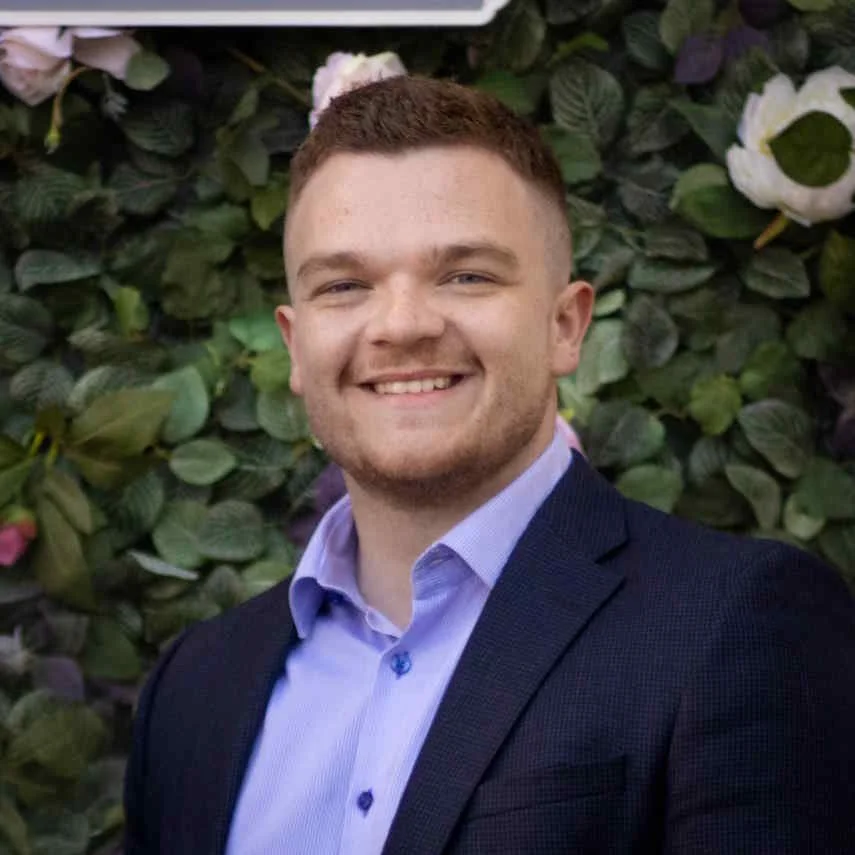
Work with Lloyd Edgar
Lloyd Edgar is a Northern Ireland-based documentary director, shooting producer/director and editor. He shot, directed and edited Rhys McClenaghan: Chasing Gold — a half-hour BBC documentary that began on the True North strand and was selected for national broadcast on BBC One as part of Our Lives, establishing him as one of the youngest directors ever featured in the strand. His follow-up film, Principal Ballerina, following Royal Ballet Principal Melissa Hamilton, was broadcast for the same strands, and he directed a ten-part conservation series for Channel 5.
Alongside his work as a director, Lloyd works as an editor, camera operator, drone pilot and motion graphics designer for both television and commercial productions, with credits for production companies including Ronin Films, Fine Point, CleanSlate and Triplevision. He is, in short, a multi-skilled, broadcast-proven documentary director — a safe pair of hands.
Production companies and executive producers looking for a documentary director or shooting PD in Belfast and across Northern Ireland can get in touch.