Affordable Video Lighting Kits: The Lights I Actually Use on Broadcast Shoots
There's a myth in filmmaking that you need expensive lighting to make professional video. You don't. I've delivered to BBC, Channel 5, RTÉ and TG4, and the lighting kit I travel with is built almost entirely from affordable, sensible gear that punches well above its price.
I'm a documentary director and videographer based in Belfast. This is the actual kit I shoot with, organised by the job each light does, so you can build something similar without spending Arri money. You can see my full equipment list here.
Start with the key light
Your key light is the most important purchase you'll make, so spend your budget here first and build everything else around it.
My key lights are a pair of Nanlite FS-300B units. They're bright, bi-colour COB lights that do the heavy lifting on interviews and brand shoots, and they cost a fraction of the premium brands while producing a clean, controllable image that holds up under broadcast scrutiny. Having two means I can light a subject and a background, or run a key and a backlight, without ever feeling short.
If I want something smaller and even cheaper as a second key or a tight-space option, I reach for the SmallRig RC60B. It's a compact COB light that's easy to travel with and genuinely useful when there's no room for a full-size fixture.
The lesson here: one good key light beats a pile of cheap panels. Nail this first.
Add LED panels for fill and flexibility
Panels are the workhorses of run-and-gun shooting. They're light, fast to set up, and easy to tuck into awkward corners.
I run the Aputure H528S and H528W panels, the spot and wide versions of the same light. These are not new or fancy, and that's the point. They're affordable, reliable, and perfect for fill light, soft top light, or lifting a background a stop or two. On a documentary day where you're moving constantly, a couple of panels you can rig in seconds are worth their weight.
Use RGB lights for cheap creative colour
This is where a small spend buys a lot of production value. A touch of colour in the background instantly makes a shot look considered rather than flat.
I carry a pair of Yongnuo YN360 RGB lights for exactly this. They're inexpensive, they dial in any colour you like, and they're brilliant for adding a hint of mood to a backdrop, faking a practical light, or giving an otherwise plain room some depth. For the money, nothing else gives you this much creative range.
Don't forget the cheap supporting gear
The lights are only half the kit. The unglamorous supporting gear is what lets you actually shape and control the light, and most of it is cheap.
My kit includes a couple of aluminium C-stands, two light stands, fixed tripods, and a pair of 3ft x 5ft bounce, reflector and diffuser panels. That diffusion is what turns a hard, cheap-looking light into a soft, flattering one, and it costs almost nothing. Honestly, a budget light through good diffusion will beat an expensive light used badly every single time.
The honest truth about lighting gear
The camera and the lights matter far less than most people think. I've watched beautiful films shot on modest kit and forgettable ones shot on the most expensive gear money can buy. What separates them is whether the person operating it understands light, not the logo on the side of the fixture.
So if you're starting out, don't wait until you can afford the premium brands. Buy one solid key light, a couple of affordable panels, an RGB or two for colour, and as much diffusion as you can carry. That's a kit capable of broadcast-standard work, and it's the philosophy behind the gear I use to deliver films for national television.
Frequently asked questions
Do you need expensive lights for professional video? No. A single quality key light plus affordable panels and good diffusion can produce broadcast-standard images. Skill with light matters far more than the price of the fixture.
What's the most important light to buy first? The key light. It does the most work and everything else is built around it, so put the bulk of your initial budget there.
Are budget LED panels good enough for broadcast? Yes, when used well. I've used affordable panels on films delivered to the BBC and Channel 5. Diffusion and placement matter more than the brand.
Want video that looks broadcast-grade without a broadcast budget? Get in touch.
Work with Lloyd Edgar
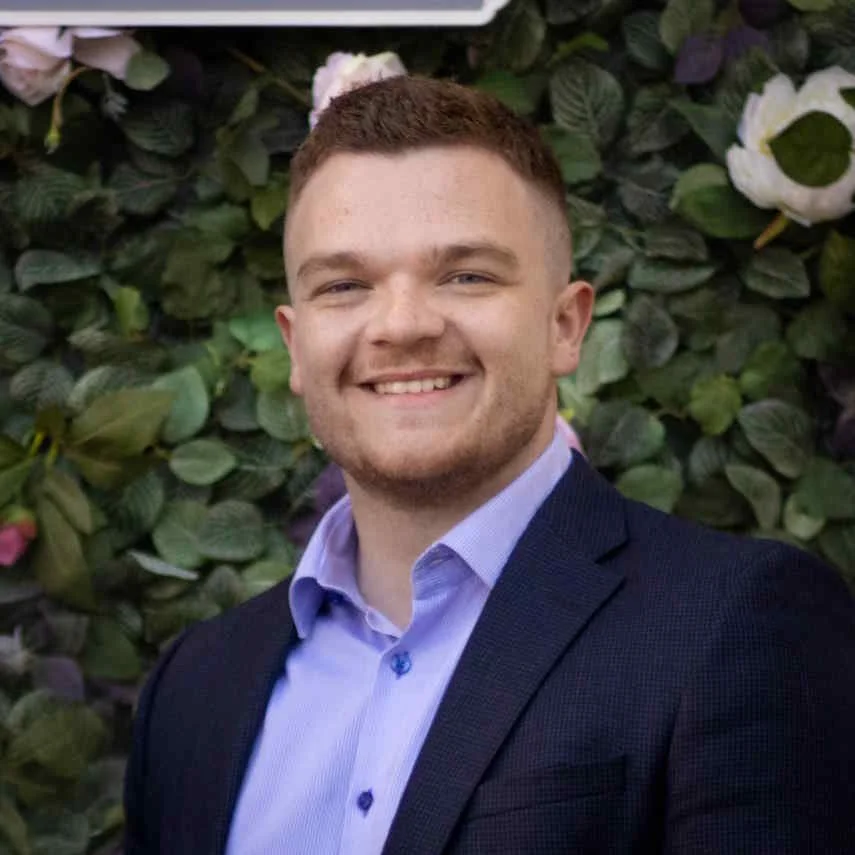
Lloyd Edgar is a Northern Ireland-based documentary director, shooting producer/director and editor. He shot, directed and edited Rhys McClenaghan: Chasing Gold — a half-hour BBC documentary that began on the True North strand and was selected for national broadcast on BBC One as part of Our Lives, establishing him as one of the youngest directors ever featured in the strand. His follow-up film, Principal Ballerina, following Royal Ballet Principal Melissa Hamilton, was broadcast for the same strands, and he directed a ten-part conservation series for Channel 5.
Alongside his work as a director, Lloyd works as an editor, camera operator, drone pilot and motion graphics designer for both television and commercial productions, with credits for production companies including Ronin Films, Fine Point, CleanSlate and Triplevision. He is, in short, a multi-skilled, broadcast-proven documentary director — a safe pair of hands.
Production companies and executive producers looking for a documentary director or shooting PD in Belfast and across Northern Ireland can get in touch.