Sony FX6 vs Sony A7S III for Documentary Filmmaking: A Working Director's Comparison
There are a lot of camera comparison articles online. Most are written by people who've never had a broadcaster's delivery spec on their desk. I own both cameras, I shoot both on every documentary I make, and I've delivered with them to BBC One, Channel 5, RTÉ and TG4. This is the comparison I wish someone had handed me before I bought.
The short answer
If you're a documentary filmmaker choosing between the Sony FX6 and the Sony A7S III, the honest truth is that the image is virtually identical. Both share the same 12-megapixel full-frame sensor lineage, both record 10-bit 4:2:2 internally, and both give you S-Cinetone and S-Log3. Drop the footage on a timeline alongside each other and even seasoned editors will struggle to tell them apart.
The decision isn't about image — it's about how you work. The FX6 is a single-operator cinema body built for long days on a tripod or shoulder, with internal ND filters, proper XLR audio and broadcast ergonomics. The A7S III is a stills-shaped run-and-gun body that disappears in a small bag, climbs into tight spaces and never intimidates a contributor.
If I had to pick one, I'd pick the FX6 — but I wouldn't want to shoot a documentary without both.
The two cameras, at a glance
Sony FX6Sony A7S IIISensorFull-frame, 10.2MPFull-frame, 12.1MPMax resolution4K UHD up to 120p, 10-bit 4:2:24K UHD up to 120p, 10-bit 4:2:2Dynamic range15+ stops~15 stopsPicture profilesS-Cinetone, S-Log3, HLGS-Cinetone, S-Log3, HLGInternal NDsYes — variable, ¼ND to 1/128NDNoAudio2× XLR with phantom power (via top handle)3.5mm + hotshoe (XLR via XLR-K3M)StabilisationLens-based + Active digitalIn-body 5-axis (5.5 stops)Weight (body)~890g~700gBatteryBP-U series (long life)NP-FZ100UK price (body)~£5,500~£3,400
(Prices correct as of 2026.)
Image quality: it's a tie — and that matters
Sony designed both cameras around the same imaging philosophy. The sensors share a generational lineage, both feed the same BIONZ XR processor, both record XAVC-I 10-bit 4:2:2 internally, and both deliver around 15 stops of dynamic range with class-leading low-light performance. Native ISO behaviour is near-identical: the FX6 sits at dual native ISO 800 and 12,800; the A7S III at 640 and 12,800.
What this means for documentary: you can intercut them all day. On Principal Ballerina (BBC One, 2026), I worked across The Royal Opera House in London and Melissa Hamilton's home in Northern Ireland. The FX6 covered controlled rehearsal and stage observation; the A7S III was the body I reached for in tight dressing-room moments and the intimate scenes at home. In the grade, you cannot tell which is which.
So if image is equal, what actually decides the purchase?
Form factor: the thing nobody tells you matters most
Documentary work lives or dies on access. A contributor who forgets you're filming gives you a different performance to one who's staring down a barrel. This is where the two cameras diverge sharply.
The A7S III disappears. It looks like a stills camera, which means people instinctively relax around it. I can fit it in a small camera bag, hop in a passenger seat, sit at a dinner table or climb into a backstage corridor without anyone treating me as a film crew. For observational documentary — the moments between the moments — this is invaluable.
The FX6 announces itself. With handle, top mic and a sensible lens attached, it's a 2.5kg+ rig that says this is a serious shoot. That's exactly what you want in a controlled interview, on a tripod set-up, or when a brand client needs to see they're getting their money's worth. It's also more comfortable to operate for a full day — it sits properly on a shoulder, the handle gives you stable low and high angles, and the grip is purpose-built for run-and-gun cinema work.
If you only ever shoot interviews and B-roll on tripods, the FX6 wins on ergonomics alone. If you mostly work observationally in small spaces, the A7S III is sometimes a better tool — even if you own the FX6.
Internal NDs: the unsung documentary hero
This is the single biggest practical difference between these two cameras, and it's the feature non-shooters most often underestimate.
The FX6 has a variable internal ND filter giving you anywhere from ¼ND to 1/128ND at the flick of a switch — up to seven stops of light reduction without ever touching the front of your lens. The A7S III has none.
Why this matters on documentary: lighting changes constantly when you're following a real human being. A contributor walks from a window-lit kitchen into a shaded hallway. The sun ducks behind a cloud mid-interview. You're on Scrabo Hill — as I was for Origin Gymnastics' brand launch with Olympic gold medallist Rhys McClenaghan MBE — and the cloud cover swings between bright overcast and shafts of direct sun every thirty seconds. With the FX6, I dial the variable ND and keep my shutter at 1/50 and aperture wide open for the cinematic depth the brief demanded. With the A7S III on the same shoot, I'd be either swapping screw-in ND filters (slow), losing depth-of-field to a stopped-down aperture, or shooting at 1/200 and losing the motion blur that gives footage its cinematic feel.
On any outdoor documentary, internal NDs save you minutes per setup. Across an eight-hour shooting day, those minutes are the difference between getting the scene and missing it.
Audio: XLRs and why a sound recordist will thank you
The FX6 has two XLR inputs with proper preamps and 48V phantom power built into its top handle. You can run a Rode NTG-2 boom and a wireless lavalier into the same body with broadcast-quality preamps and proper level control on physical dials.
The A7S III gives you a 3.5mm jack and a hotshoe. You can run a Sony XLR-K3M adapter to add two XLR inputs, but it sits on top of the camera, occupies your hotshoe, and adds cost and a potential point of failure.
For broadcast documentary, where I'm often running dual lavs from a Rode Wireless Go II and a boom on top, the FX6 wins comfortably. For brand work where I'm running a dedicated Tascam DR-70D anyway, the A7S III's limitation matters less.
Slow motion, autofocus and the things that matter on a real shoot
Both cameras hit 4K at 120fps. Both can run Full HD up to 240fps. Both share Sony's class-leading hybrid autofocus with real-time eye AF for humans and animals.
On Chasing Gold — my BBC One debut — autofocus and high frame rate were everything. Gymnastics happens fast. A pommel routine is a blur of unpredictable arcs. Sony's eye AF held lock on Rhys's face through the chaos in a way that simply wasn't possible five years ago. The FX6 and A7S III both excel here, and the practical difference between them is negligible.
The A7S III pulls slightly ahead with 5-axis in-body image stabilisation — genuinely useful if you're shooting handheld without a gimbal. The FX6 relies on lens stabilisation plus electronic Active stabilisation, which crops slightly. If you do a lot of run-and-gun without rigging up, IBIS earns its place in the comparison.
Power, ergonomics and day-on-set practicality
The FX6 uses Sony's BP-U series batteries — the same broadcast-standard pack you'll find on FS-line cameras. A single BP-U35 runs the camera comfortably for over an hour; a BP-U70 will get you through a half-day. They're chunky, but they're proven, and rental houses stock them.
The A7S III uses NP-FZ100 batteries — small, plentiful and shared across most of the Sony Alpha line, but you'll need three or four for a full day, plus a USB-C power bank if you're shooting long.
The FX6's body has also been designed with documentary in mind: assignable buttons in the right places, a proper SDI out for monitor feeds, a top handle that holds the rig together when you don't have a sound op, and a tally light that tells your contributor when you're recording. It's not glamorous. It's just correct.
Cost: not just the body
This is where many filmmakers misunderstand the comparison. The list-price gap looks significant — the FX6 is around £5,500 body-only, the A7S III around £3,400 — but the true gap is smaller than it appears.
To get the A7S III up to the FX6's practical capabilities, add:
A matte box or set of variable ND filters: £200–£600
An XLR-K3M audio adapter: ~£500
A cage and top handle: £150–£300
Three or four extra NP-FZ100 batteries: £200
You're now looking at £4,500–£5,000 invested. The FX6, meanwhile, ships ready to work.
That said — none of this addresses the fact that the A7S III is smaller, lighter and less intimidating, and no amount of money makes the FX6 into a discreet camera. The A7S III earns its keep by being a different tool, not a cheaper one.
My answer in practice: how I use both
On every documentary I direct, both cameras are in the kit. Here's how I split them:
FX6 as A-camera for sit-down interviews, observational scenes I can shoot from a tripod or shoulder, anything outdoors where NDs matter, and any scenario where a brand or broadcaster needs to see a "proper" camera on set.
A7S III as B-camera for tight spaces, second-angle interview cover, run-and-gun travel days, and observational footage where presence would change the moment.
A7S III as A-camera when I'm working solo in genuinely intimate environments — a contributor's bedroom, a backstage corridor, a moving car — and crew visibility is the bigger threat to the story than camera spec.
For commercial and brand work — Heritage, Heart and Hope for Ards and North Down Borough Council, the Origin Gymnastics launch film, the Nomad Counters product film — the FX6 is almost always the lead. Outdoor cinematic work demands the NDs, controlled corporate environments suit the ergonomics, and clients respond well to the visible craft tools.
Which should you buy?
A blunt set of recommendations:
Buy the FX6 if you mostly shoot interviews, controlled scenes, outdoor work or brand films; if you work with sound recordists who need XLRs; if you do long days on tripod or shoulder; or if you want one camera that signals professionalism to clients and broadcasters.
Buy the A7S III if you're primarily an observational documentary shooter, you travel light, you work in tight or intimate spaces, you need a discreet camera for sensitive subjects, or you want a second body that pairs perfectly with an FX6 you might add later.
Buy both if you can. They're sensor-matched siblings. Owning both gives you a full documentary toolkit — broadcast-spec A-camera ergonomics and a pocketable B-camera that goes anywhere — and the footage cuts seamlessly together.
Frequently asked questions
Is the Sony FX6 worth the extra cost over the A7S III? For working professionals shooting daily, yes. The internal NDs, XLR audio, longer battery life and shoulder-friendly ergonomics pay back the price difference in time saved and reliability gained. For occasional shooters or filmmakers prioritising portability, the A7S III is the smarter buy.
Can the FX6 and A7S III use the same lenses? Yes — both are E-mount full-frame cameras. Any lens that works on one works on the other, which is part of why they make such a strong A-cam/B-cam pairing. My own kit covers both with Sigma 16-24mm F2.8, Sigma 24-70 F2.8, Sony 28-135mm F4 and Sony 24-240mm F3.5-6.3.
Which is better for low-light documentary? They're effectively identical. Both have dual native ISO with a high base around 12,800, and both deliver remarkably clean footage in available light. I've shot in candle-lit interiors and backstage corridors on both bodies without reaching for additional lighting.
Do either camera overheat? Neither has been a problem in real-world documentary use. The FX6 has a dedicated heat dissipation structure and runs indefinitely. The A7S III handles long takes well; in extreme heat with 4K 120p you may occasionally see warnings, but standard 4K 25p/50p runs all day without issue.
Is the FX6 a broadcast-approved camera? Yes. The FX6 is on the approved list of multiple broadcasters including the BBC and meets standard broadcast delivery specifications when recorded in XAVC-I 10-bit 4:2:2.
A final word
The camera matters far less than most filmmakers think. I've watched extraordinary documentaries shot on iPhones and forgettable ones shot on ARRI Alexas. Story, access, and the relationship between filmmaker and subject decide the work — not the brand on the side of the body.
What the FX6 and A7S III both do well is get out of the way. They take broadcast-quality images, run reliably for long days, and don't make you fight the gear when the moment arrives. Choose the one that fits how you actually shoot — not the one with the higher price tag.
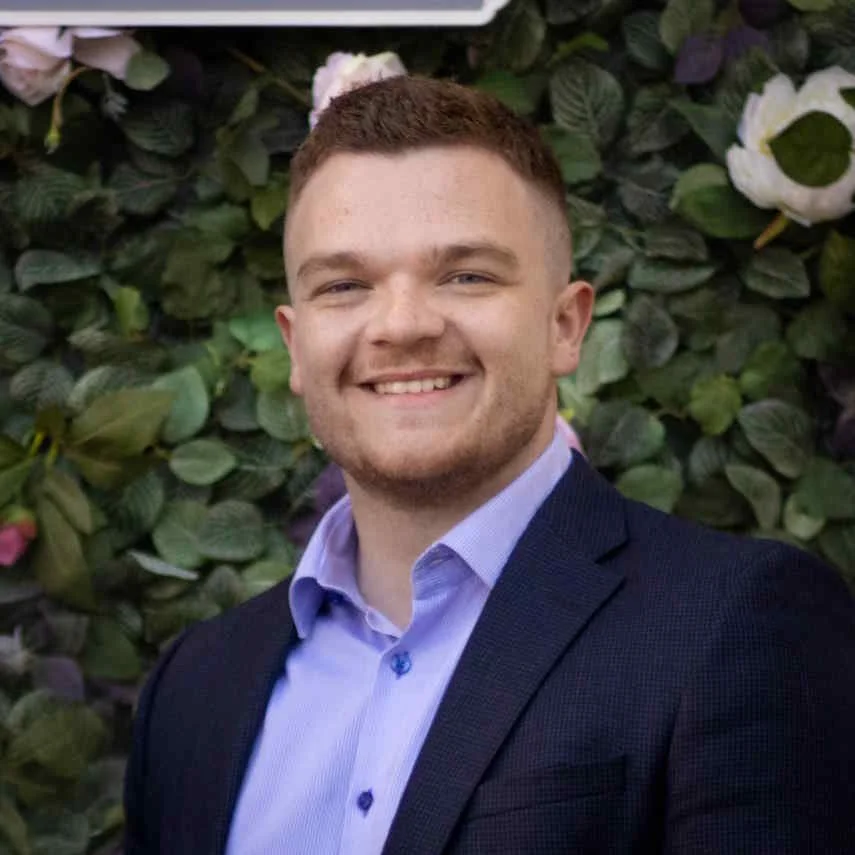
Lloyd Edgar is a documentary director and videographer based in Belfast, with directing credits on BBC One and Channel 5.
To discuss a project, get in touch or see the full kit list.