How to Pitch a BBC Documentary
If you want to pitch a documentary to the BBC, here's the most useful thing I can tell you: produce a killer teaser. Three to five minutes. Go out for a day or two and actually film something.
Most people want to do this with a written treatment. A document explaining the film they're going to make, who's in it, why it matters. Treatments have their place. But a 1,000-page treatment couldn't touch the power of a three-minute teaser, and I say that as someone whose entire broadcast career has been built on teasers.
I'm a documentary director based in Northern Ireland. Both of my BBC films, Chasing Gold and Principal Ballerina, were commissioned off the back of teasers. In each case the teaser was, more or less, the first five minutes of the finished film. So I'm not theorising here. This is the thing that worked, twice.
What a teaser actually is
There are two ways to do it.
The first is a trailer. The same kind of thing you'd see online, on TV or in the cinema advertising a film. Fast, atmospheric, designed to make you feel something and want more.
The second is a scene-select. This is where you physically produce a portion of the film as it might actually appear in the finished product. A real scene, shot and cut to broadcast standard, lifted straight out of the film that doesn't exist yet.
My two BBC teasers were the second kind. Each one was essentially the opening of the film, made for real before there was any money on the table.
Why it beats anything you could write
When you send a teaser to a commissioner, you're communicating a huge amount that words simply cannot carry.
A teaser shows the pace of the film. The tone. The music choices. The style of photography. The editing rhythm. Your access to the subject. All of that lands instantly and at once, in a way no treatment can describe, because the commissioner isn't reading your promise of a film, they're watching the actual thing.
It also does something a treatment can never do. It proves you can direct. Anyone can write a confident document. A teaser shows you can take an idea out into the world, point a camera at it, and come back with something that works on screen. That's the question the commissioner is really asking, and the teaser answers it before they've finished watching.
It de-risks the whole decision
Here's the part commissioners feel even if they don't say it out loud. A teaser makes the project feel like less of a gamble.
When part of the film already exists, the ball is clearly rolling. You're not asking them to fund an idea from a standing start. You're showing them something already in motion and inviting them to help you finish it. Psychologically that's a completely different proposition. The risk drops, because a chunk of the film is already shot and proven.
Chasing Gold started as a teaser I shot in a single day in Dublin. My executive producer, Ronan McCloskey, lent me his camera, lights and sound kit, I drove down, filmed an interview and some B-roll with Rhys, and cut the piece together in a day. That teaser went straight to the BBC. Principal Ballerina was the same approach. I self-funded a half-day shoot with Melissa Hamilton at the Royal Opera House before there was any commission, and that footage became the spine of the pitch.
Even teasers for films that fall apart pay off. I once shot a teaser for a project that collapsed at the last minute when the contributors dropped out. Gutting at the time. But the producer liked the teaser so much that he came back weeks later with a different commission entirely, the Love Nature series for Channel 5. The teaser proved I could direct, and that proof outlived the project it was made for.
The bar you're aiming for
There's a simple test for whether your teaser is good enough. At the end of those three minutes, the commissioner should be annoyed. Annoyed that it stopped. Annoyed they can't watch the rest right now.
That's the feeling you're chasing. Not "this is a promising idea," but "where's the rest of it?" If you leave them wanting the full film immediately, you've done your job, and you've made saying yes the easiest decision in the room.
So before you write the treatment, before you build the deck, go and shoot something. Pick the strongest scene in the film you can see in your head and actually make it. A day or two of filming and a day in the edit will tell a commissioner more than any document ever could.
If you're a producer or commissioner looking for a documentary director, or you've got a story you think is worth a teaser, get in touch.
📞 07407 195957 ✉️ lloyd@abbeyfilms.uk 🌐 Documentary work
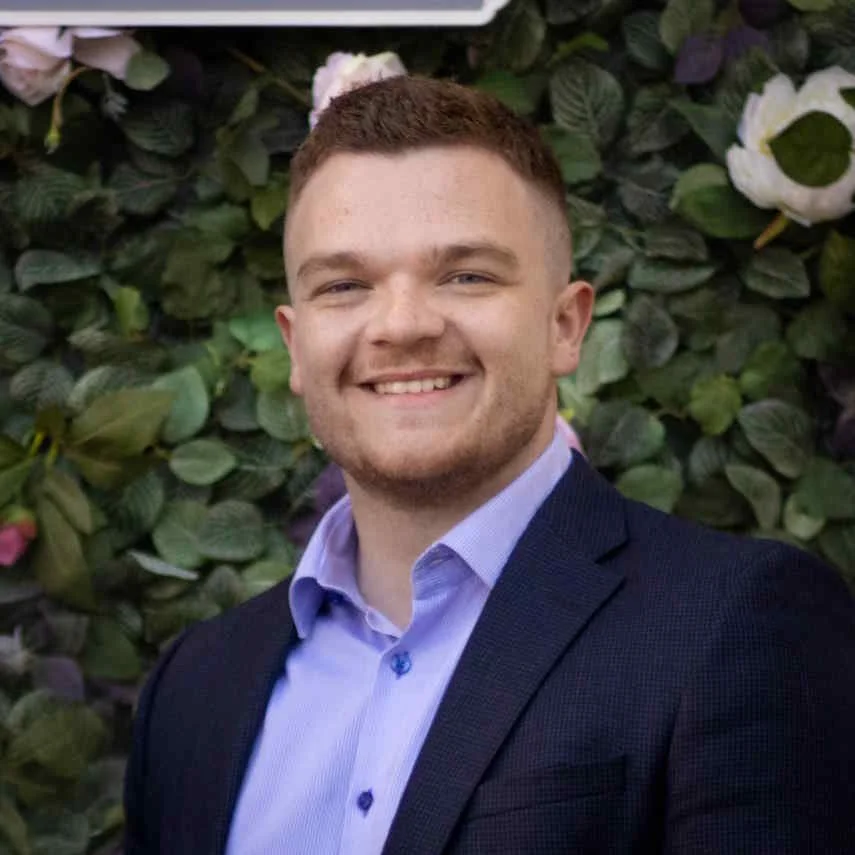
Work with Lloyd Edgar
Lloyd Edgar is a Northern Ireland-based documentary director, shooting producer/director and editor. He shot, directed and edited Rhys McClenaghan: Chasing Gold — a half-hour BBC documentary that began on the True North strand and was selected for national broadcast on BBC One as part of Our Lives, establishing him as one of the youngest directors ever featured in the strand. His follow-up film, Principal Ballerina, following Royal Ballet Principal Melissa Hamilton, was broadcast for the same strands, and he directed a ten-part conservation series for Channel 5.
Alongside his work as a director, Lloyd works as an editor, camera operator, drone pilot and motion graphics designer for both television and commercial productions, with credits for production companies including Ronin Films, Fine Point, CleanSlate and Triplevision. He is, in short, a multi-skilled, broadcast-proven documentary director — a safe pair of hands.
Production companies and executive producers looking for a documentary director or shooting PD in Belfast and across Northern Ireland can get in touch.